
Introduction
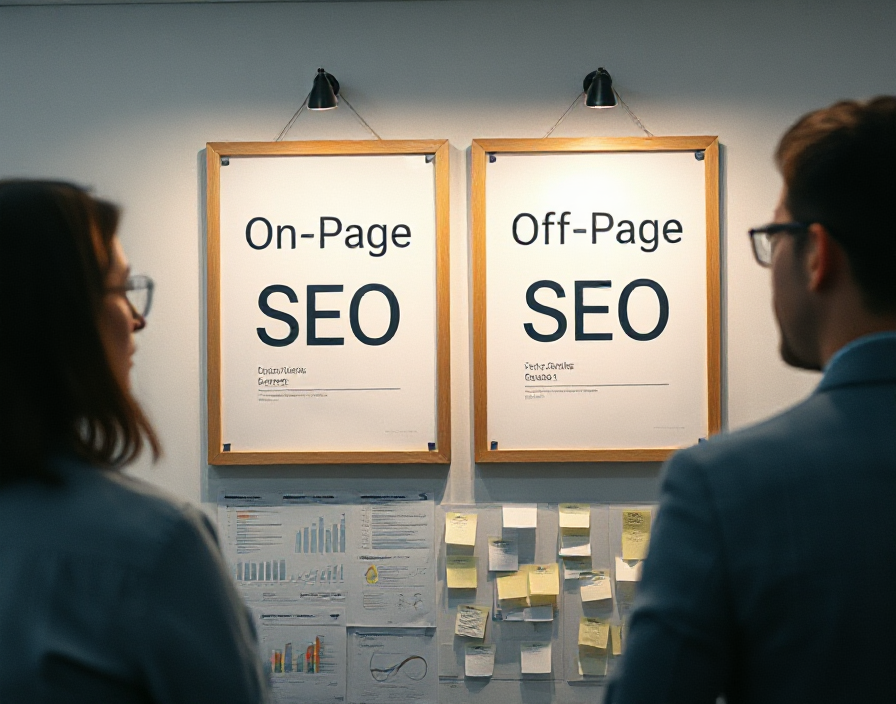
SEO is like a two-sided coin—on one side, you have on-page SEO, which ensures your website is optimized for search engines and users. On the other side, you have off-page SEO, which builds your site’s credibility and authority beyond your website.
If SEO were a party, on-page SEO would be you cleaning the house, decorating, and preparing a great playlist to make sure guests have a good time. Off-page SEO, on the other hand, is your reputation—what people say about your party before they even step inside. Both are crucial for getting more people through the door and ensuring they stay.
In this guide, we’ll break down the differences between on-page and off-page SEO, their key elements, and how to leverage both for better search rankings.
What is On-Page SEO?
On-page SEO refers to optimizations made directly on your website to improve its visibility on search engines. These optimizations ensure that search engines understand your content and rank it accordingly.
Key Elements of On-Page SEO
- Keyword Optimization
Keywords are the foundation of on-page SEO. Placing relevant keywords strategically in your content helps search engines understand what your page is about. This includes:
- Titles and headings
- Meta descriptions
- URL structures
- Image alt text
- Naturally throughout the content (without keyword stuffing)
- High-Quality Content
Content is king in SEO. Creating valuable, engaging, and informative content improves your chances of ranking well. Search engines prioritize pages that:
- Answer users’ queries effectively
- Are well-structured with clear headings
- Include multimedia like images and videos
- Provide original and unique insights
- Title Tags and Meta Descriptions
Title tags and meta descriptions are the first things users see in search results. They should be:
- Concise (under 60 characters for titles, 155 for meta descriptions)
- Keyword-rich
- Engaging to encourage clicks
- URL Structure
A clean and descriptive URL structure enhances user experience and improves SEO. Compare these examples:
- Bad URL: www.example.com/p=123
- Good URL: www.example.com/best-running-shoes
- Internal Linking
Internal links connect different pages within your website. This helps search engines crawl your site and distributes link authority. Example:
- A blog post about “Best Running Shoes” linking to a guide on “How to Choose the Right Running Shoes”
- Image Optimization
Images enhance content, but large files can slow down your site. Optimizing images includes:
- Compressing file sizes
- Using descriptive alt text
- Choosing the right file formats (JPEG, PNG, or WebP)
- Mobile-Friendliness
With Google’s mobile-first indexing, having a mobile-responsive website is essential. A mobile-friendly site:
- Loads quickly on smartphones
- Has a responsive design
- Provides a seamless user experience
- Page Speed Optimization
Page speed impacts both SEO and user experience. To improve speed:
- Use a content delivery network (CDN)
- Optimize images and videos
- Minify CSS, JavaScript, and HTML
- Schema Markup
Schema markup is structured data that helps search engines understand your content better. It enhances rich snippets, such as:
- Review ratings
- Event details
- Product information
- User Experience (UX) Signals
Google considers user experience when ranking websites. This includes:
- Low bounce rates (users staying on your site)
- High dwell time (users spending time engaging with your content)
- Easy navigation
What is Off-Page SEO?
Off-page SEO focuses on activities outside your website that impact rankings. Think of it as your website’s reputation—what others say about it, who links to it, and how authoritative it is perceived.
Key Elements of Off-Page SEO
- Backlinks (Link Building)
Backlinks are links from other websites pointing to yours. Google treats them as votes of confidence, boosting your site’s authority. The best backlinks come from:
- High-authority sites
- Relevant industry websites
- Natural, earned links (not spammy or paid links)
- Social Signals
While social media doesn’t directly impact rankings, shares, likes, and engagement drive traffic and increase brand awareness. Active social media presence can amplify your content and attract backlinks.
- Brand Mentions
When reputable websites mention your brand (even without linking), it builds credibility. Google recognizes unlinked mentions as a sign of authority.
- Guest Blogging
Writing guest posts for authoritative websites allows you to:
- Build backlinks
- Establish authority in your niche
- Drive traffic back to your site
- Influencer Outreach
Collaborating with industry influencers helps expand your reach and credibility. If influencers share or link to your content, it increases visibility and trustworthiness.
- Business Listings and Citations
Local businesses benefit from citations—mentions of their name, address, and phone number (NAP) on directories like Google My Business, Yelp, and industry-specific sites.
- PR and Media Coverage
Getting featured in news articles, podcasts, or interviews boosts credibility and can generate high-quality backlinks.
- Forum and Community Engagement
Participating in niche forums and communities (like Reddit, Quora, or industry-specific groups) helps build your brand’s authority and attracts relevant visitors.
- Video Marketing
Creating and optimizing YouTube videos can drive traffic to your site. Optimized video descriptions with links back to your site act as a valuable SEO asset.
- Content Promotion
Actively promoting your content via email marketing, social media, and outreach increases its reach, leading to more backlinks and engagement.
On-Page vs. Off-Page SEO: A Side-by-Side Comparison
| Feature | On-Page SEO | Off-Page SEO |
| Control | You have full control | Relies on external factors |
| Focus | Content, site structure, user experience | Backlinks, reputation, authority |
| Key Benefit | Improves site relevance and usability | Builds domain trust and credibility |
| Examples | Title tags, meta descriptions, URL structure | Link building, guest blogging, social signals |
| Speed of Impact | Faster (changes reflect quickly) | Slower (takes time to build authority) |
Which One is More Important?
Both on-page and off-page SEO are essential. You can have the best website in the world, but if nobody links to it or talks about it, your rankings will struggle. Likewise, a website with thousands of backlinks but poor content and slow loading speeds won’t rank well either.
For optimal SEO success:
- Start with on-page SEO (foundation)
- Build off-page SEO over time (authority)
- Continuously track, optimize, and adapt
Final Thoughts
SEO is like a well-balanced diet—you need both on-page and off-page elements to stay healthy in the search rankings. By optimizing your website’s content and structure while building external credibility, you can drive more traffic, improve rankings, and establish long-term online success.
Ready to level up your SEO game? Start by refining your on-page SEO today, and don’t forget to invest in off-page strategies to gain a competitive edge.