
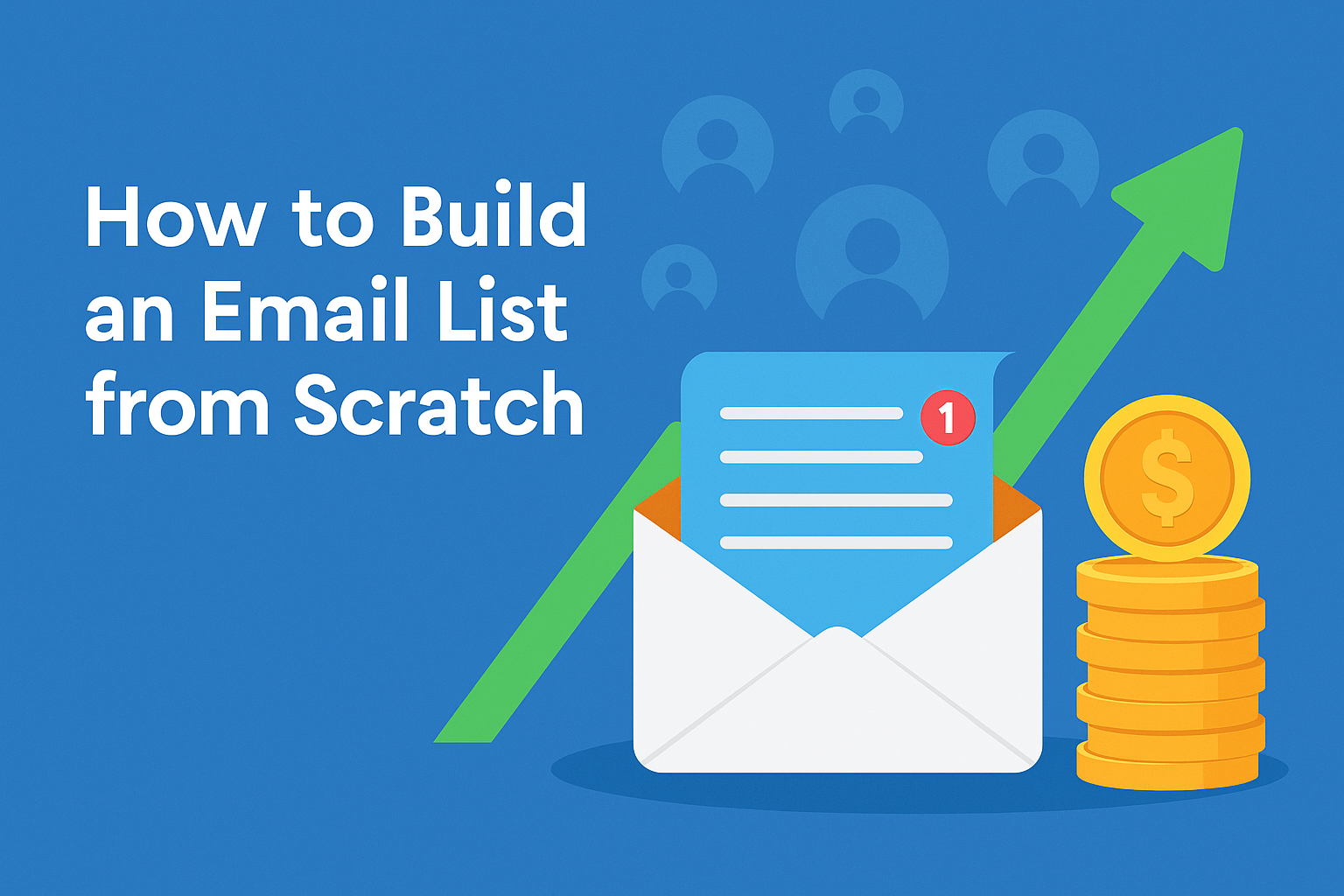
How to Build an Email List from Scratch
No List? No Problem. Here’s How to Go from Zero to a Thriving Subscriber Base
Email marketing might not be as flashy as TikTok or as trendy as Reels, but make no mistake—your email list is pure marketing gold.
Unlike social media platforms that can change algorithms overnight, your email list is an asset you own. It’s your direct line to your most interested audience—people who said yes, I want to hear more.
But how do you build that list if you’re starting from scratch?
Let’s break it down—step by step—into a strategy you can actually follow and implement. Think of this as the “build your dream list” blueprint.
Why Email Still Matters (A Lot)
Email marketing isn’t just alive—it’s thriving. According to Litmus, email delivers an ROI of $36 for every $1 spent. That’s not just good; that’s unreasonably good.
Here’s why email remains king:
-
It’s permission-based (you’re not interrupting)
-
It’s personal (inbox = digital living room)
-
It’s direct (no algorithm getting in your way)
-
It’s measurable (open rates, click rates, conversions)
-
It scales (from 10 subscribers to 10,000+)
If social media is the party, email is the afterparty—where the real conversations (and conversions) happen.
Step 1: Know Who You’re Building the List For
Before you create a single opt-in, get super clear on your ideal subscriber.
Ask yourself:
-
Who do I want on this list?
-
What are their pain points or desires?
-
What kind of value can I consistently deliver to them?
-
What kind of transformation are they seeking?
Pro tip: You’re not just building a list—you’re building a community of people who align with your brand, message, and value.
Step 2: Choose the Right Email Marketing Platform
You don’t need fancy tech, but you do need a platform that makes it easy to:
-
Create opt-in forms
-
Build email sequences
-
Segment subscribers
-
Analyze performance
Great beginner-friendly tools:
-
Mailchimp (easy and intuitive)
-
ConvertKit (great for creators and automation)
-
MailerLite (affordable and powerful)
-
Klaviyo (robust for ecommerce)
Pick one, get familiar with it, and start building.
Step 3: Create a Lead Magnet That Solves a Real Problem
Nobody gives up their email for free anymore. You need a bribe-worthy reason—something that solves a specific pain point quickly and clearly.
These are called lead magnets, and they come in many forms:
-
Checklists
-
Templates
-
Free guides or eBooks
-
Mini email courses
-
Webinars or video series
-
Free tools or calculators
-
Discount codes or freebies
The best lead magnets do three things:
-
Provide quick, clear value
-
Align with your core offer or product
-
Are instantly consumable
Think of your lead magnet as a tiny but mighty transformation.
Step 4: Set Up a High-Converting Landing Page
This is the digital real estate where you collect those golden email addresses.
A high-converting landing page includes:
-
A compelling headline
-
A subheadline that explains the benefit
-
A mockup or visual (if possible)
-
Bullet points that highlight value
-
A single, clear call-to-action (CTA)
-
No distractions (remove menus and footers)
Use tools like:
-
Carrd (great for one-page opt-ins)
-
Leadpages
-
Unbounce
-
Your website builder (WordPress, Squarespace, etc.)
Your landing page isn’t just a sign-up form—it’s a mini sales pitch for your email list.
Step 5: Promote the Heck Out of It
If you build it, they won’t come—unless you tell them about it. Promotion is the secret sauce.
Where to promote:
-
Your homepage and blog sidebar
-
Your Instagram bio link
-
Pinned tweet or LinkedIn post
-
Facebook group cover photo or post
-
Guest blog posts or podcast appearances
-
Paid ads (especially Facebook/Instagram)
-
YouTube video descriptions
-
Quora answers, Reddit posts (where relevant)
Pro tip: Create a few content pieces (like blog posts or videos) that naturally lead into your lead magnet, then promote those.
Step 6: Add Inline and Exit-Intent Opt-Ins to Your Website
Your website should be working for you—24/7—to grow your list.
Try these opt-in types:
-
Inline forms within blog content
-
Exit-intent popups when users try to leave
-
Slide-in scroll boxes at 50–75% page scroll
-
Footer sign-ups on all pages
-
Gated content upgrades on specific blog posts
Don’t overdo it—but definitely make your offers easy to find.
Step 7: Leverage Content Marketing to Drive Traffic to Your Opt-Ins
You don’t just need a lead magnet—you need traffic to feed it.
Use content marketing to attract the right people:
-
Write SEO-friendly blog posts that align with your lead magnet
-
Create YouTube videos or Reels with CTAs
-
Run a mini challenge and collect sign-ups
-
Host a free webinar and require registration
-
Answer questions on Quora/Reddit with links back to your content
Organic traffic builds momentum over time—this is the compound interest of your list growth.
Step 8: Nurture Your Subscribers from Day One
A new subscriber is like a new guest at your party—don’t just hand them a drink and walk away.
Set up a welcome sequence that:
-
Thanks them for signing up
-
Delivers the lead magnet
-
Introduces you and your brand story
-
Shares your best content or offers
-
Sets expectations (what kind of emails and how often)
This builds trust, sets the tone, and warms them up for future offers.
Step 9: Keep Showing Up with Value
List-building doesn’t stop at the sign-up. The real magic happens when you keep showing up consistently with content your subscribers love.
Send:
-
Weekly or biweekly newsletters
-
Curated tips and resources
-
Personal stories and lessons
-
Behind-the-scenes updates
-
Exclusive offers and sneak peeks
Be consistent. Be helpful. Be human.
And remember: It’s not about having the biggest list. It’s about having the most engaged one.
Step 10: Track, Test, and Improve
Watch these key metrics:
-
Open rate (avg: 20–30%)
-
Click-through rate (avg: 2–5%)
-
Unsubscribe rate (keep under 1%)
-
Conversion rate (depends on offer)
-
List growth rate (track weekly or monthly)
Test subject lines, CTAs, send times, and even the frequency. Your email list is a living ecosystem, and data is how you keep it thriving.
Bonus Tip: Don’t Wait Until It’s Perfect
Analysis paralysis kills momentum. You don’t need the perfect lead magnet or pixel-perfect landing page.
What you need is to start.
Pick a tool. Build a basic opt-in. Write your first email. Hit publish. Then learn and refine as you go.
Done is better than perfect—and starting today means results tomorrow.
Final Thoughts: Building a List is Like Planting a Garden
You plant the seeds (opt-ins), water them with value (emails), give them sunshine (consistency), and over time—you grow a beautiful ecosystem of loyal readers and buyers.
It won’t happen overnight, but it will happen—if you commit to serving your audience with useful, honest, and helpful content.
Because at the end of the day, your email list isn’t just a marketing asset.
It’s a community of people who trust you.
And that, my friend, is something worth building.