
What Is Domain Authority (DA), Really?
Imagine your website is a new kid at school. Domain Authority is your reputation score. The higher your reputation, the more likely other students (aka search engines) are to trust you, hang out with you, and recommend you to others.
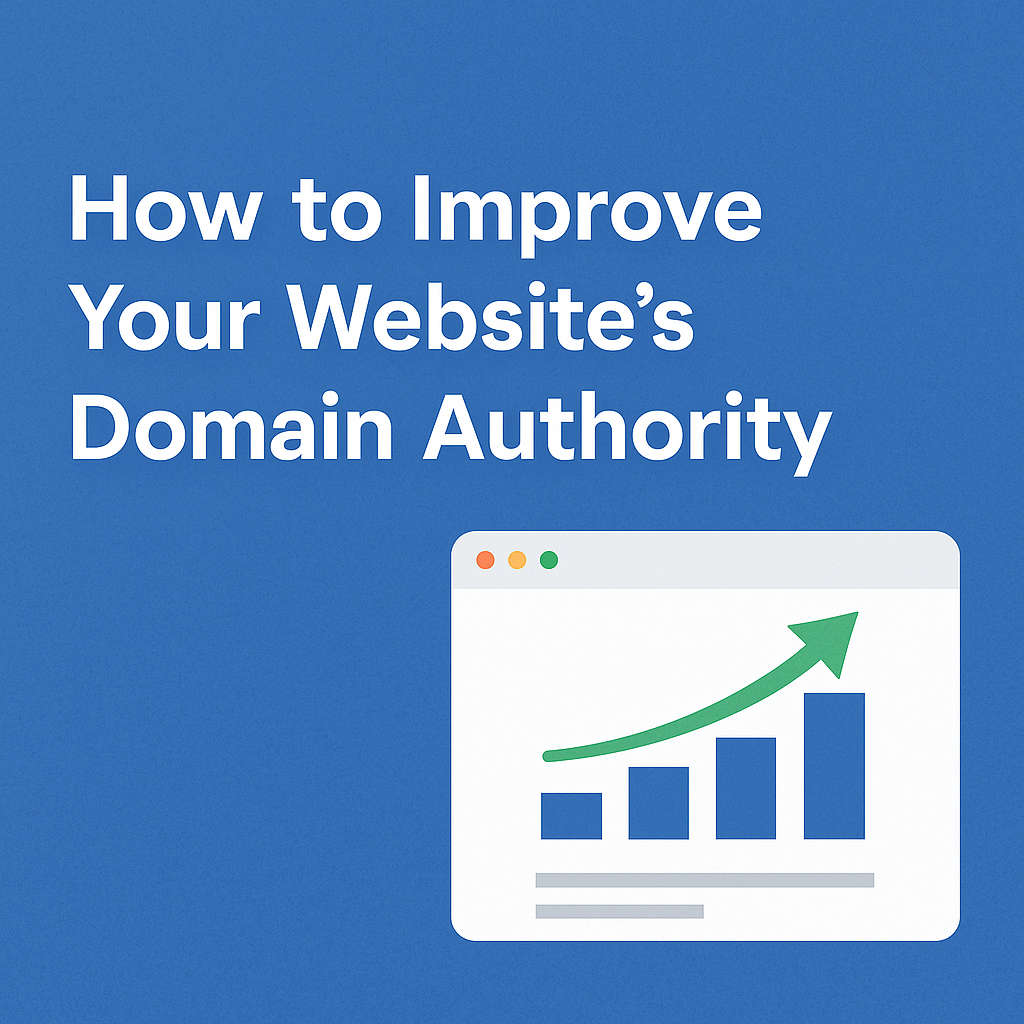
In SEO terms, Domain Authority (or DA) is a ranking metric developed by Moz that predicts how likely a website is to rank on search engine results pages (SERPs). It ranges from 1 to 100—the higher the score, the better your chances of ranking.
While DA itself isn’t used by Google, it’s a helpful proxy. Sites with high DA usually have strong link profiles, high-quality content, and consistent SEO practices.
So, how do you grow yours? Let’s dig into the strategies.
1. Create High-Quality, Link-Worthy Content
If DA is your online reputation, then content is your personality. Great content earns respect—and more importantly, backlinks.
Here’s how to create content that people want to link to:
-
Original Research: Share unique stats or industry insights.
-
Comprehensive Guides: Think long-form, step-by-step tutorials.
-
Infographics: Visually snackable and super shareable.
-
Expert Roundups: Feature insights from well-known names in your niche.
-
Case Studies: Real-world proof of concepts, tools, or strategies in action.
Pro tip: If you wouldn’t bookmark it, it’s probably not link-worthy.
2. Earn Backlinks from Authoritative Sites
Backlinks are votes of confidence. A backlink from a trusted, high-authority site tells Google, this content is legit.
Tactics to earn high-quality backlinks:
-
Guest Posting: Offer to write value-packed content for relevant blogs in your industry.
-
Broken Link Building: Find dead links on other sites and suggest your content as a replacement.
-
Digital PR: Create a newsworthy asset—survey results, reports, unique stories—and pitch it to journalists.
-
Skyscraper Technique: Improve an existing piece of high-ranking content, then reach out to the sites linking to the original.
Avoid shady link-building tactics like buying links or using link farms—those will hurt your DA, not help.
3. Optimize Your Internal Linking Structure
Think of internal links as the hallways of your website—they help both visitors and search engines navigate your site.
Benefits of smart internal linking:
-
Boosts page authority across your site
-
Helps Google index your pages
-
Keeps visitors engaged longer
Use relevant anchor text and link to cornerstone content (your most valuable pages). Every blog post should link to at least 2–5 other relevant internal pages.
4. Make Sure Your Website is Technically Sound
You can have the best content in the world, but if your site is slow or unsecure, your domain authority suffers.
Run your site through tools like:
-
Google PageSpeed Insights
-
GTmetrix
-
Ahrefs Site Audit
-
Screaming Frog
Look for:
-
Broken links
-
Slow-loading pages
-
Missing meta tags
-
Poor mobile responsiveness
-
Duplicate content
Don’t skip this step. SEO is not just about content—it’s also about technical hygiene.
5. Improve Your Site’s User Experience (UX)
Google rewards sites that serve their visitors well.
Key UX improvements to focus on:
-
Responsive design: Mobile-first is a must.
-
Fast load times: Aim for under 3 seconds.
-
Clear navigation: Make menus intuitive and easy to follow.
-
Readable design: Use white space, headers, and bullet points to make scanning easy.
Great UX keeps visitors on your site longer—and increases the chance they’ll link to it or share it.
6. Focus on E-A-T: Expertise, Authoritativeness, Trustworthiness
This concept—E-A-T—comes directly from Google’s Quality Rater Guidelines. It’s their way of telling you what “good” content looks like.
Here’s how to build your E-A-T:
-
Include author bios with credentials
-
Show real-world experience through examples or case studies
-
Link to reputable sources
-
Maintain a secure site with HTTPS
-
Get listed on reputable directories and industry sites
If you’re in a “Your Money or Your Life” category (finance, health, legal), this is extra important.
7. Be Consistent with Publishing and Promotion
Search engines love freshness. Don’t let your blog or website go stale.
Create a content calendar and aim for:
-
Weekly or bi-weekly blog posts
-
Regular content updates
-
Ongoing link outreach
-
Seasonal or topical campaigns
Then promote each piece across:
-
Social media
-
Email newsletters
-
Syndication platforms like Medium or Flipboard
A steady drumbeat of activity builds both authority and audience over time.
8. Monitor Your Backlink Profile Regularly
Your backlink profile is like your credit report—it needs to be clean, relevant, and strong.
Use tools like:
-
Ahrefs
-
Moz Link Explorer
-
SEMrush
-
Google Search Console
Watch out for:
-
Toxic backlinks (spammy sites)
-
Lost backlinks (try to reclaim them)
-
Unlinked brand mentions (ask for attribution!)
Regular maintenance ensures you’re not building DA on a shaky foundation.
9. Increase Social Signals
While social signals don’t directly influence DA, they amplify your reach and potential for backlinks.
Strategies to improve social visibility:
-
Encourage sharing with embedded buttons
-
Repurpose content for different platforms (e.g., turn blog posts into reels or threads)
-
Run mini-campaigns for your best content
-
Tag influencers or contributors when you mention them
More visibility → more engagement → more backlinks → better DA.
10. Be Patient and Play the Long Game
Let’s not sugarcoat it—improving Domain Authority takes time. It’s not a flip-you-switch-on-and-wait game.
Domain Authority grows from:
-
Relevance
-
Reputation
-
Relationships
-
Routine SEO work
If you’re doing the right things consistently—publishing great content, earning quality links, and optimizing your site—your DA will improve over time.
Domain Authority Myths (Debunked)
Let’s bust a few misconceptions:
MYTH: Domain Authority is a Google ranking factor
TRUTH: Nope—DA is a Moz metric, not something Google officially uses.
MYTH: You can improve DA overnight
TRUTH: Building authority is a slow, compounding process.
MYTH: Higher DA always means better rankings
TRUTH: DA is directional, not definitive. A site with lower DA but better relevance and content can outrank a higher DA site.
Final Thoughts: It’s About Authority, Not Just Numbers
Improving Domain Authority isn’t about gaming a score—it’s about earning trust. You’re building a brand, not just a backlink profile.
When you focus on providing real value, solving problems, and building connections in your industry, your authority (and your rankings) will follow.
So yes, DA is important—but it’s just one signal in a complex ecosystem.
Focus on what you can control: helpful content, strong relationships, and technical excellence.
You don’t need to be a 100. You just need to be better than you were yesterday.